
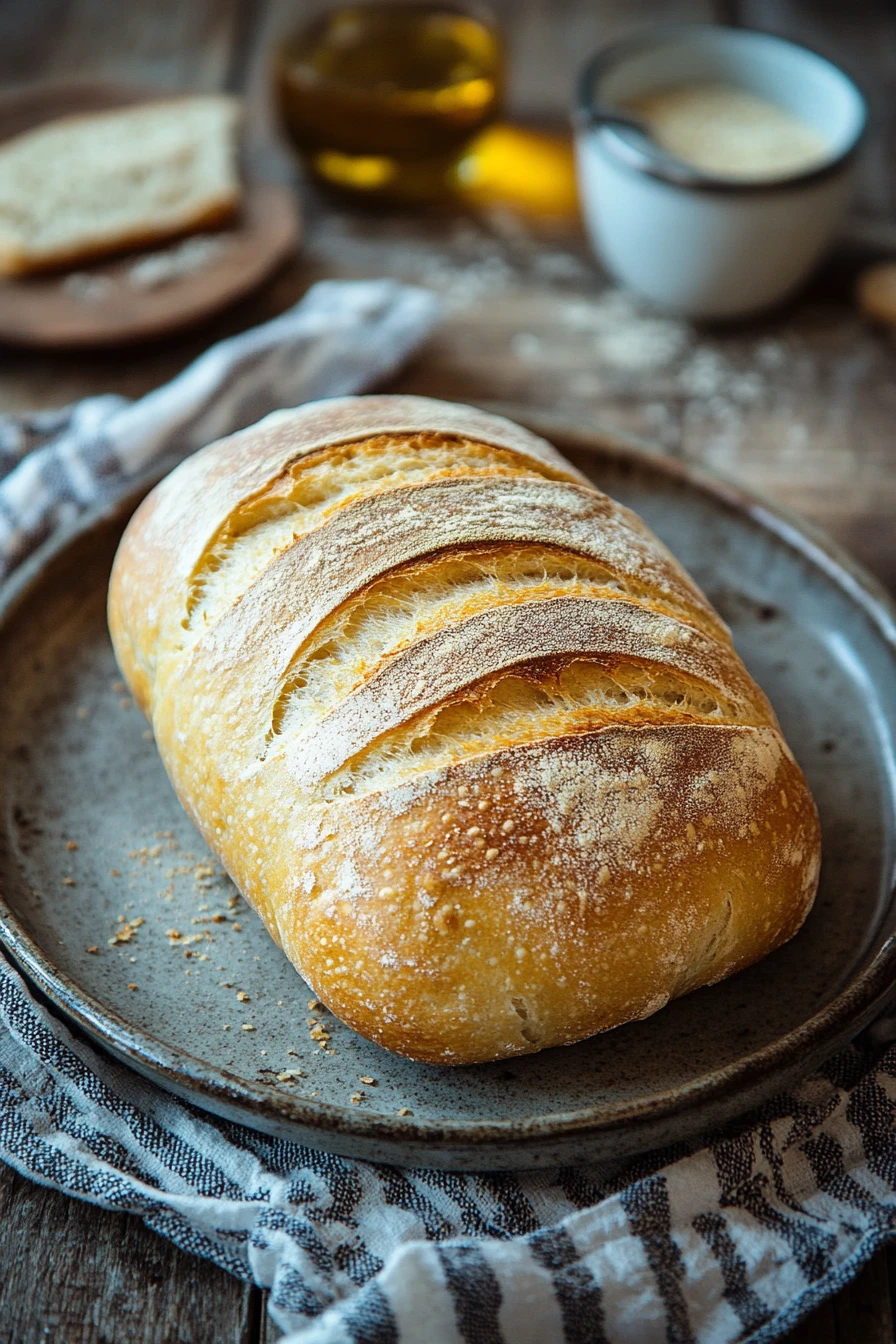

There’s something about the sound of crusty bread breaking that changes how you experience dinner. This Italian bread for pasta has that satisfying crackle when you slice into it, revealing a soft, airy interior that practically begs to be dipped into sauce. I remember the first time I baked this loaf—it wasn’t perfect. I got distracted halfway through shaping the dough and ended up with a slightly uneven loaf, but it still tasted amazing. The smell filled the kitchen, warm and inviting, and somehow that imperfection made the bread feel even more homemade and comforting.
This bread is not just a side; it’s a part of the meal. Whether you’re twirling spaghetti or ladling rich marinara, having a crusty loaf like this elevates the whole experience. It’s the kind of bread you want to tear apart with your hands, the kind that soaks up every last drop of sauce without falling apart. I usually have to remind myself to save some for leftovers because it disappears fast.
- Its crisp crust contrasts perfectly with the soft interior, making each bite a textural delight.
- Simple ingredients come together in a recipe that’s easy to follow but requires a bit of patience—and that’s part of the charm.
- It’s simple—and that’s kind of the point. No fancy additions, just good bread that complements your meal.
- While it’s great fresh, the bread also freezes well, so you can enjoy it beyond just one dinner.
If you’ve never baked your own bread before, this recipe is a gentle introduction that rewards your effort with a loaf that’s both rustic and satisfying. It’s a nice reminder that sometimes, the simplest things take the longest but are worth every minute.
PrintItalian Bread for Pasta
A classic Italian bread recipe perfect for serving alongside pasta dishes. This bread has a crisp crust and a soft, airy interior, ideal for soaking up sauces.
- Prep Time: 15 minutes
- Cook Time: 30 minutes
- Total Time: 1 hour 45 minutes
- Yield: 8 slices 1x
Ingredients
3 1/2 cups all-purpose flour
1 packet (2 1/4 teaspoons) active dry yeast
1 1/4 cups warm water (110°F/43°C)
1 tablespoon granulated sugar
2 teaspoons salt
2 tablespoons olive oil
1 tablespoon cornmeal (for dusting)
Instructions
In a small bowl, combine warm water, sugar, and yeast. Stir gently and let sit for 5 to 10 minutes until foamy.
In a large mixing bowl, whisk together flour and salt.
Make a well in the center of the flour mixture and pour in the yeast mixture and olive oil.
Stir with a wooden spoon until a rough dough forms.
Turn the dough onto a floured surface and knead for 8 to 10 minutes until smooth and elastic.
Place the dough in a lightly oiled bowl, cover with a clean kitchen towel, and let rise in a warm place for 1 hour or until doubled in size.
Preheat the oven to 400°F (200°C).
Punch down the dough and shape it into a round loaf.
Place the loaf on a baking sheet dusted with cornmeal.
Using a sharp knife, make 3 shallow diagonal slashes across the top of the loaf.
Cover the loaf with a kitchen towel and let it rest for 15 minutes.
Bake the bread in the preheated oven for 25 to 30 minutes, or until the crust is golden brown and the loaf sounds hollow when tapped on the bottom.
Remove the bread from the oven and let cool on a wire rack before slicing and serving.
Don’t worry about having fancy equipment; a good mixing bowl and a baking sheet are all you need. I like to serve this bread alongside a hearty pasta dish or with a drizzle of olive oil and a sprinkle of herbs. If you want to switch things up, adding some garlic powder to the dough or sprinkling rosemary on top before baking can be a fun experiment, though I haven’t tried all the variations myself. Sometimes, just dusting the baking sheet with cornmeal gives the loaf a nice rustic finish that feels like a little extra care.
FAQ
Can I make this bread ahead of time? Yes, it freezes well for up to a month. Just thaw it at room temperature before serving.
What if I don’t have cornmeal? You can skip it or use flour, though cornmeal adds a nice texture to the crust.
Does the dough need to rise in a warm place? Ideally, yes. A slightly warm spot helps the yeast do its job, but room temperature usually works fine if you’re patient.
This bread is a quiet star at the dinner table, turning simple pasta night into something a little more special. Give it a try and see how the familiar comfort of fresh bread can change the whole meal.