
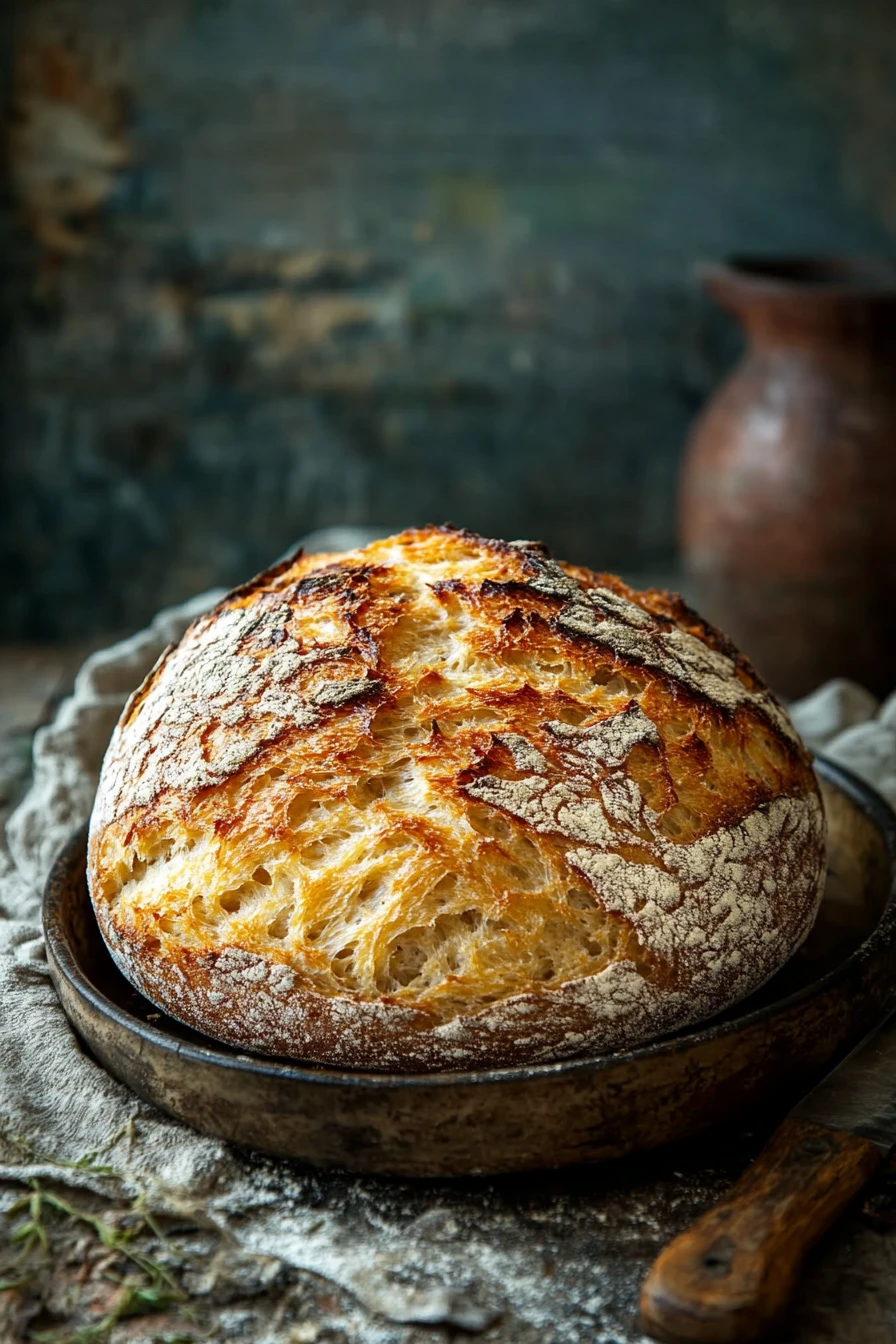

There’s something quietly satisfying about pulling a rustic loaf of bread from the oven, especially when it’s made with surprisingly little fuss. This no-knead bread recipe from the New York Times has become my go-to when I want that crusty, artisan-style bread without spending hours working the dough. It’s one of those kitchen moments that feels almost magical — simple ingredients, a bit of patience, and then the reward of a golden, fragrant loaf.
One afternoon, I decided to try making this bread after a long day when my brain was too tired for anything complicated. The dough, sticky and shaggy, sat on the counter, covered, while I got distracted by a phone call that ran longer than expected. I wasn’t sure if I’d left it too long or not long enough, but when I finally peeked, the surface was dotted with bubbles and the dough had nearly doubled in size. That little imperfection — the uncertainty, the waiting — somehow made the final crust even more satisfying. And the smell, oh the smell as it baked, filled the kitchen with cozy warmth.
- It’s practically foolproof; the long rest time does the heavy lifting, so you don’t have to.
- The crust is perfectly crisp, but the inside stays tender and chewy — a lovely balance.
- The recipe doesn’t demand fancy equipment, just a covered oven-safe pot to bake it in.
- It’s simple — and that’s kind of the point. No need to worry about kneading or shaping perfectly.
- Since it takes up to 18 hours to rise, it requires a bit of planning ahead, which might not be ideal for last-minute cravings.
Don’t worry if you’re not a seasoned baker — this recipe is quite forgiving. You’ll be amazed at what patience and a few basic ingredients can do. And if you’re wondering about storage, the crust stays lovely for a couple of days when kept in a paper bag, or you can freeze the loaf for longer.
PrintNo-Knead Bread (New York Times)
A simple and easy no-knead bread recipe from the New York Times that produces a crusty, artisan-style loaf with minimal effort.
- Prep Time: 15 minutes
- Cook Time: 45 minutes
- Total Time: 12 hours 0 minutes
- Yield: 1 loaf 1x
Ingredients
3 cups (360 grams) all-purpose flour
1/4 teaspoon instant yeast
1 1/4 teaspoons salt
1 5/8 cups (375 milliliters) warm water
Instructions
In a large mixing bowl, combine the flour, instant yeast, and salt.
Add the warm water to the dry ingredients and stir with a wooden spoon or spatula until a shaggy, sticky dough forms.
Cover the bowl tightly with plastic wrap or a clean kitchen towel and let the dough rest at room temperature for 12 to 18 hours until the surface is dotted with bubbles and the dough has doubled in size.
Lightly flour a work surface and place the dough on it. Sprinkle a little flour on top and fold the dough over on itself once or twice. Shape it into a rough ball.
Place a large piece of parchment paper inside a clean bowl and transfer the dough onto the parchment paper. Cover loosely with a kitchen towel and let it rest for 1 to 2 hours until it has nearly doubled in size.
About 30 minutes before the dough is ready, place a heavy covered Dutch oven or oven-safe pot with lid in the oven and preheat to 450°F (230°C).
Carefully remove the hot pot from the oven. Lift the parchment paper with the dough and place it into the pot. Cover with the lid and bake for 30 minutes.
Remove the lid and bake for an additional 15 minutes until the bread is deep golden brown and crusty.
Remove the bread from the pot and let it cool completely on a wire rack before slicing.
For this kind of bread, I usually use a heavy pot with a lid — something that can handle the heat and trap steam to develop that signature crust. Serving it warm with a swipe of butter or alongside a bowl of soup feels just right. If you want to experiment, some folks try adding herbs or garlic to the dough, but honestly, I haven’t tested all of these variations enough to say for sure how they’ll turn out. Still, it’s fun to imagine the possibilities.
FAQs often pop up about rising times and how to tell when the dough is ready — look for the bubbly surface and the dough roughly doubling in size. And if your kitchen is cool, it might take a bit longer, which is totally normal. Just keep an eye on it.
Ready to give your kitchen a little rustic charm? This no-knead bread is waiting to fill your space with warmth and that irresistible aroma. Scroll down, save it, and when the time feels right, bake it up — you won’t regret it.