
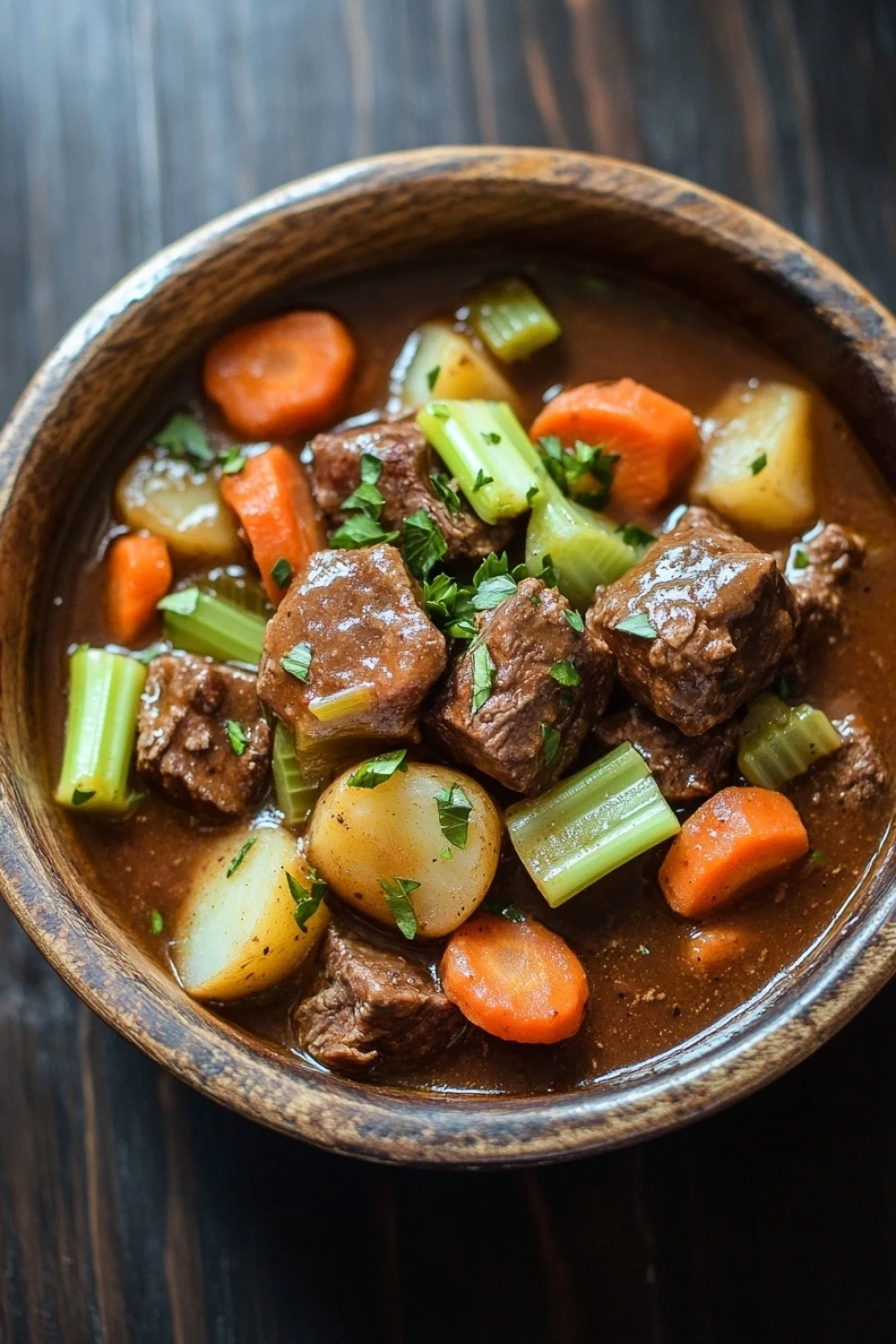

Cold night—time to dig in.
There’s something about a simmering pot of beef stew that fills a kitchen with a warm kind of magic. I remember the first time I browned that skillet beef stew meat—the sizzle, the aroma that hit me like a cozy slap in the face. It’s not just cooking; it’s a ritual, a slow dance of flavors coming together over an hour and a half. The kind of stew that doesn’t rush, the kind that demands patience and gives back comfort tenfold.
Throw in those hearty chunks of browned beef, carrots, potatoes, and celery, all mingling in a broth enriched with red wine and herbs. When the stew starts thickening, you know you’ve hit jackpot. It’s the kind of dish that clings to your ribs and keeps winter at bay—no fancy frills, just honest, stick-to-your-ribs goodness.
Trust me, this isn’t your average throw-together meal. It’s a labor of love for anyone who craves real-deal homestyle cooking. Break out the Dutch oven, stir the pot, and get ready to savor every bite.
For a delicious twist on beef stew with skillet beef stew meat, check out our Slow Cooker Beef and Gravy Stew for Cozy Evenings at Home recipe.
Real Life Perks of Cooking Beef Stew with Skillet Beef Stew Meat
- Perfect for weeknight warriors who crave a stick-to-your-ribs meal after a long day—set it, forget it, and come back to comfort.
- Freezes like a champ—make a double batch, stash some away, and rescue future dinners with zero hassle.
- One-pot wonder alert: minimal cleanup means more time to kick back and less time scrubbing pans.
- Transforms humble ingredients into a serious meal crowd-pleaser, great for feeding the gang without breaking the bank.
- Loaded with veggies and protein, it’s a hearty dish that sticks with you through cold evenings and hungry moods.
Beef Stew with Skillet Beef Stew Meat
A hearty and comforting beef stew made with tender skillet beef stew meat, simmered with vegetables in a rich, flavorful broth.
- Prep Time: 20 minutes
- Cook Time: 1 hour 40 minutes
- Total Time: 2 hours
- Yield: 6 1x
Ingredients
2 pounds skillet beef stew meat, cut into 1-inch cubes
2 tablespoons vegetable oil
1 large onion, chopped
3 cloves garlic, minced
4 cups beef broth
1 cup red wine
3 large carrots, peeled and sliced into 1/2-inch pieces
3 medium potatoes, peeled and cut into 1-inch cubes
2 stalks celery, sliced
2 tablespoons tomato paste
1 teaspoon dried thyme
1 teaspoon dried rosemary
2 bay leaves
Salt, to taste
Black pepper, to taste
2 tablespoons all-purpose flour
2 tablespoons cold water
Fresh parsley, chopped (for garnish)
Instructions
Heat the vegetable oil in a large heavy-bottomed pot or Dutch oven over medium-high heat.
Add the skillet beef stew meat in batches, making sure not to overcrowd the pot, and brown the meat on all sides, about 5 minutes per batch. Remove the browned meat and set aside.
In the same pot, add the chopped onion and cook until softened, about 5 minutes.
Add the minced garlic and cook for an additional 1 minute until fragrant.
Return the browned beef to the pot and stir in the tomato paste. Cook for 2 minutes to coat the meat.
Pour in the red wine and scrape the bottom of the pot to release any browned bits. Let the wine reduce by half, about 5 minutes.
Add the beef broth, dried thyme, dried rosemary, bay leaves, salt, and black pepper. Stir to combine.
Bring the mixture to a boil, then reduce the heat to low, cover, and simmer for 1 hour.
After 1 hour, add the sliced carrots, potatoes, and celery to the pot. Stir well, cover, and continue to simmer for another 40 minutes, or until the vegetables and meat are tender.
In a small bowl, whisk together the all-purpose flour and cold water until smooth to make a slurry.
Stir the slurry into the stew and cook uncovered for 5 to 10 minutes, stirring occasionally, until the stew thickens.
Remove the bay leaves and adjust seasoning with additional salt and pepper if needed.
Serve hot, garnished with chopped fresh parsley.
Explore more:
Dinner Recipes
Mastering Beef Stew: From Meat to Magic
The Quick Browning Hack That Saves Hours
Let me drop a truth bomb: the secret to a stew that doesn’t taste like boiled shoe leather starts with browning your beef right—no shortcuts. You gotta treat your skillet beef stew meat like a VIP—don’t overcrowd the pan. When that juicy, marbled meat hits hot oil, it sears, locking in juices and creating those coveted brown bits (fond) that build flavor layers like a boss. I once tried dumping all the meat in at once—disaster. Instead of a sizzle symphony, I got a sad steam party. Patience pays off here—work in batches, give each cube of meat room to breathe and brown to a rich mahogany. This step alone will make your stew sing without needing a fancy kitchen gadget.
Why Red Wine Is More Than Just a Fancy Add-In
Red wine isn’t just about the booze buzz—it’s the secret weapon that adds depth and complexity. When you pour it in and scrape the bottom of the pot, you’re lifting those caramelized bits that are stuck like stubborn barnacles, melding them into the liquid. The slow reduction? That’s where the magic happens—concentrating flavors until your stew broth is layered with bold, tangy, almost meaty notes that water alone can’t touch. If you’re dry on wine, don’t sweat—sub a splash of balsamic vinegar or a teaspoon of red wine vinegar mixed with broth. But beware—skip the vinegar if you’re not ready for that tart punch. Trust me, this step makes your stew taste like it spent a weekend simmering at grandma’s.
Fixing the Sludge: When Your Stew Isn’t Thick Enough
Nothing kills a stew vibe faster than a watery, thin broth. If you find yourself staring at a sad, runny pot, don’t panic. This is where the good old slurry—flour mixed with cold water—steps in like a superhero. Stir it in slowly, give the stew a few minutes to thicken up while bubbling away uncovered. Pro tip: don’t dump the flour in dry; you’ll end up with lumps worse than grandma’s knitting mistakes. Instead, whisk it smooth before hitting the pot. If you’re gluten-free, cornstarch or arrowroot powder works just as well. Remember, thickening is a delicate dance—too much and you get glue, too little and it’s still soup masquerading as stew. Keep it just right, and you’re golden.
Beef Stew FAQs — Your Burning Questions Answered
A: Absolutely. Chuck roast or brisket works like a charm. Just remember to adjust your cooking time slightly—some pieces might need a bit longer to get that melt-in-your-mouth texture.
A: No. If you’re not a fan or want to skip alcohol, swap with extra beef broth and a splash of balsamic vinegar for that tangy depth.
A: The flour slurry in the recipe is your best bet. Stir it in slowly while the stew simmers uncovered. If you’re feeling fancy, a mashed potato or a handful of instant potato flakes can also do the trick.
A: You bet. In fact, it’s one of those dishes that gets better the next day when the flavors really marry. Cook everything, cool it down, refrigerate overnight, then reheat gently.
A: Nothing beats a crusty piece of bread or buttery mashed potatoes to sop up all that rich gravy. If you want to get wild, try a simple green salad to cut through the heaviness.