
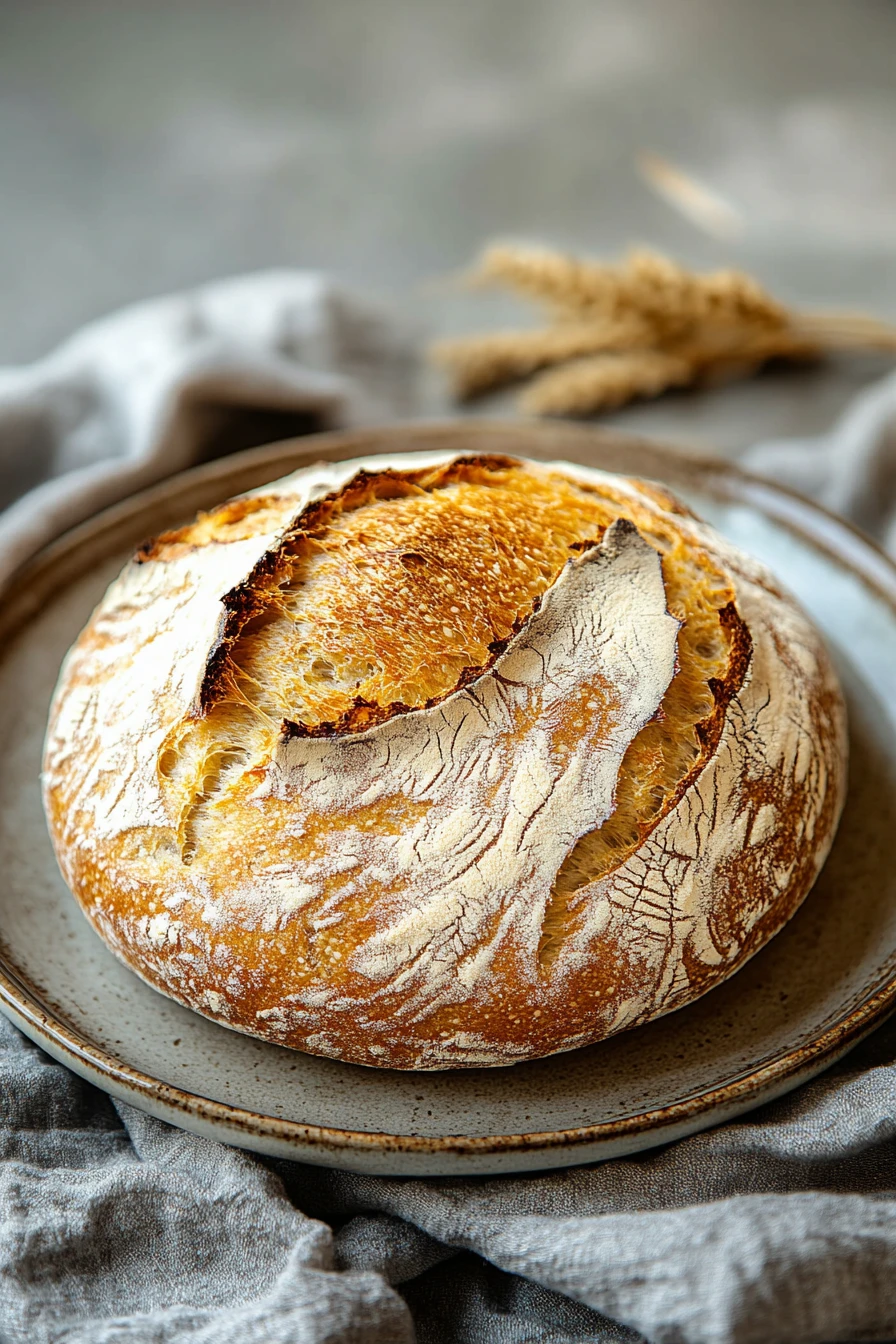

There’s something quietly satisfying about bread made with almost no fuss. This no knead bread with active dry yeast feels like that kind of magic—simple, approachable, and unexpectedly rewarding. It’s the kind of loaf you can start before breakfast and still have fresh, rustic bread ready by dinner, with a crust that crackles and a crumb that’s soft but sturdy.
I remember the first time I tried this recipe, the dough was messier than I expected, sticky and shaggy, almost like it wasn’t going to come together. I set it aside, half-worrying I’d made a mistake, and then four hours later, the bowl was full of airy bubbles and a dough that felt alive. Pulling the dough onto the counter was a little awkward—sticky fingers and all—but folding it gently into a rough shape felt oddly calming. By the time the kitchen filled with the smell of baking bread, I was already thinking about the butter and jam waiting for that first slice.
It’s remarkable how a few basic pantry staples and some patience can transform into something so comforting. The crust isn’t delicate, but that’s kind of the point—it’s hearty and crisp, perfect for dipping or just tearing apart with your hands.
Why You’ll Love It
- Minimal effort for a loaf that looks and tastes like it took hours of work.
- The slow rise lets flavors develop naturally, making the bread flavorful without extra ingredients.
- It’s simple — and that’s kind of the point. No kneading means less mess and less hassle.
- Great for beginners who might feel intimidated by traditional bread recipes.
- The crusty exterior contrasts beautifully with a soft, open crumb inside.
If you’re feeling a bit unsure about the timing or the sticky dough, don’t worry. This bread requires patience more than precision, and a little imperfection in the dough only adds character.
PrintNo Knead Bread with Active Dry Yeast
A simple and easy no knead bread recipe using active dry yeast that yields a crusty, flavorful loaf with minimal effort.
- Prep Time: 15 minutes
- Cook Time: 45 minutes
- Total Time: 5 hours
- Yield: 8 slices 1x
Ingredients
3 cups all-purpose flour
1/4 teaspoon active dry yeast
1 1/4 teaspoons salt
1 1/2 cups warm water (about 110°F)
Instructions
In a large mixing bowl, combine 3 cups of all-purpose flour, 1/4 teaspoon of active dry yeast, and 1 1/4 teaspoons of salt. Stir until evenly mixed.
Add 1 1/2 cups of warm water (about 110°F) to the dry ingredients and stir with a wooden spoon or spatula until a shaggy, sticky dough forms.
Cover the bowl tightly with plastic wrap or a clean kitchen towel and let the dough rest at room temperature for 4 hours. The dough will rise and become bubbly.
After 4 hours, generously flour a clean work surface and turn the dough out onto it. Fold the dough over itself once or twice to shape it into a rough ball, but do not knead.
Place the dough seam side down on a piece of parchment paper and cover it loosely with a kitchen towel. Let it rest for 30 minutes.
About 30 minutes before baking, place a heavy Dutch oven or oven-safe pot with a lid into the oven and preheat to 450°F (230°C).
Carefully remove the hot Dutch oven from the oven. Using the parchment paper, lift the dough and place it into the Dutch oven. Cover with the lid.
Bake covered for 30 minutes. Then remove the lid and bake for an additional 15 minutes until the crust is deep golden brown.
Remove the bread from the oven and transfer it to a wire rack. Let it cool completely before slicing.
Kitchen Notes: I usually use a heavy pot with a lid to get that perfect crust, but honestly, any oven-safe dish that can hold heat well works. Serving it warm with butter and a sprinkle of flaky salt makes all the difference. Sometimes I add a handful of herbs or olives to the dough, though I haven’t experimented enough to say exactly how much to add without throwing off the texture. For a slight change, you could swap half the water for milk or use bread flour if you have it. Just remember, the dough will be sticky and a bit unruly—that’s normal, not a mistake.
FAQ
Can I use instant yeast instead of active dry yeast? Yes, but you might want to reduce the amount slightly and skip the warm water step since instant yeast can be mixed directly with dry ingredients.
What if my dough doesn’t rise much? The slow rise is key, so make sure your kitchen isn’t too cold. Sometimes it just takes a bit longer; the dough should be bubbly and puffy before baking.
How do I store leftover bread? Keep it in a paper bag or bread box for a couple of days. If you want it longer, freezing wrapped bread works well—just thaw before slicing.
There’s something deeply satisfying about pulling apart a fresh loaf that you barely had to work for. So next time you want a little baking comfort without the fuss, this no knead bread might just become your go-to.